5 Wheelchair Accessible Colorado Destinations to Visit
Affiliate Disclosure: Some of the links on this site are affiliate links. If you click on one and make a purchase, we may earn a commission at no additional cost to you. We only recommend products and services that we believe will be useful to our readers, and affiliate relationships never influence our opinions or the content we publish.
There’s a stubborn myth about Colorado: that the good stuff is reserved for people who can hike eight miles uphill at altitude. It isn’t true, and it hasn’t been for a while.
Some of this state’s most staggering scenery is reachable by paved trail, by gondola cabin, or straight from the driver’s seat. You can watch bison from your car twenty minutes from downtown Denver. You can reach the top of a 14,000-foot peak on pavement. You can ride one of the most beautiful lifts in North America for free, in a cabin the operator will slow down for you.
What follows are five Colorado destinations where accessibility isn’t an afterthought. It is built in. One note before you go: accessibility details change with construction, weather, and season. Every one of these places is worth a phone call before you commit, and I’ve flagged the ones where the rules shifted recently.
1. Rocky Mountain National Park
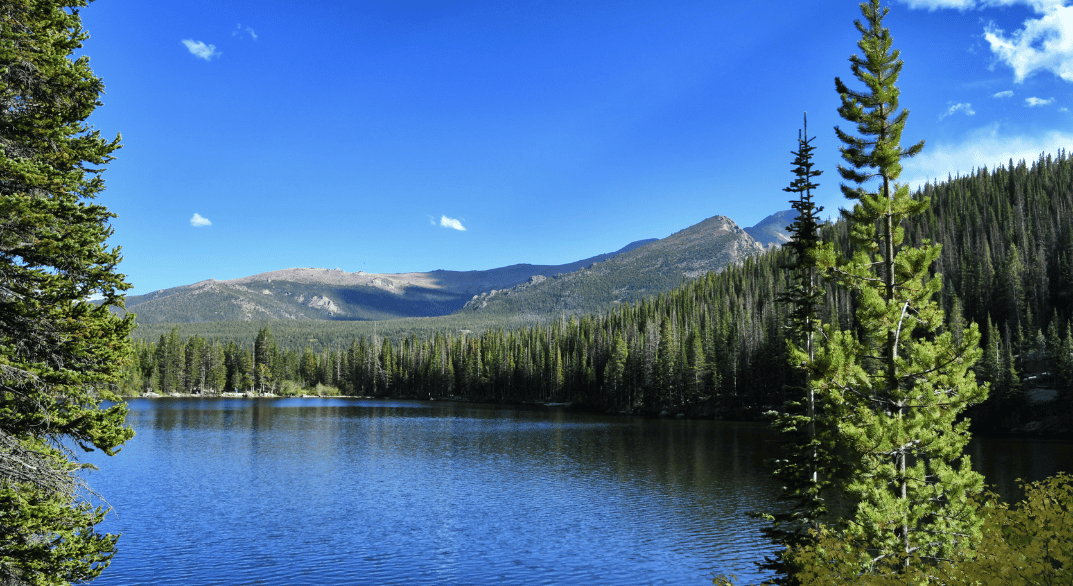
Bear Lake
Rocky is the obvious pick, and it earns it. Four trails are formally designated as wheelchair accessible, and the park’s Access Rocky guide is unusually candid about grades and problem spots.
Accessibility Highlights
Lily Lake is the star: a 0.8-mile loop with just 17 feet of elevation gain, surfaced in packed gravel with a wide boardwalk along the south shore. Accessible parking, accessible vault toilets, an accessible fishing pier, and accessible picnic tables. Fair warning: one stretch on the south side is genuinely hilly, and some mobility aid users will want a hand there. The Lily Ridge spur trails are not accessible.
Sprague Lake is a 0.8-mile packed-gravel loop with 34 feet of gain, an accessible fishing pier, flush toilets in summer, and, remarkably, an accessible backcountry tent campsite half a mile from the parking lot.
Bear Lake is the most photographed and the least accessible of the three; grades exceed 8% in places and there are log steps on the southwest side.
Alpine Visitor Center (11,796 ft) is wheelchair accessible, and the paved path to Forest Canyon Overlook delivers a jaw-dropping canyon view with minimal effort.
Things to Do
Drive Trail Ridge Road, the highest continuous paved road in the United States, with eleven miles above treeline and accessible parking at numerous pullouts. Fish from the piers at Lily or Sprague. For moose, skip Lily Lake and head to Sprague Lake at dusk or the Coyote Valley Trail on the Grand Lake side, a flat, hard-packed mile through prime moose habitat. The Estes Park Hiker Shuttle lets you leave the car in town entirely.
Know before you go: Timed entry reservations run May 22 through mid-October 2026 and apply to all areas, including Lily Lake. If you are headed to Bear Lake or Sprague, you need the Timed Entry + Bear Lake Road permit (5 a.m. to 6 p.m.). Everything else needs standard Timed Entry (9 a.m. to 2 p.m.). United States citizens with a permanent disability qualify for the free lifetime America the Beautiful Access Pass, which covers entry but not the timed reservation.
Where to Stay
Estes Park’s highway-corridor chain hotels are your most reliable bet for roll-in showers and true step-free rooms, while the charming cabin resorts often have none. On the west side, Grand Lake is quieter with fewer accessible options, so book early.
Quality Inn near Rocky Mountain National Park in Estes Park, CO
Holiday Inn by IHG in Estes Park, CO
Best Western Plus Silver Saddle Inn in Estes Park, CO
2. Mount Blue Sky Scenic Byway
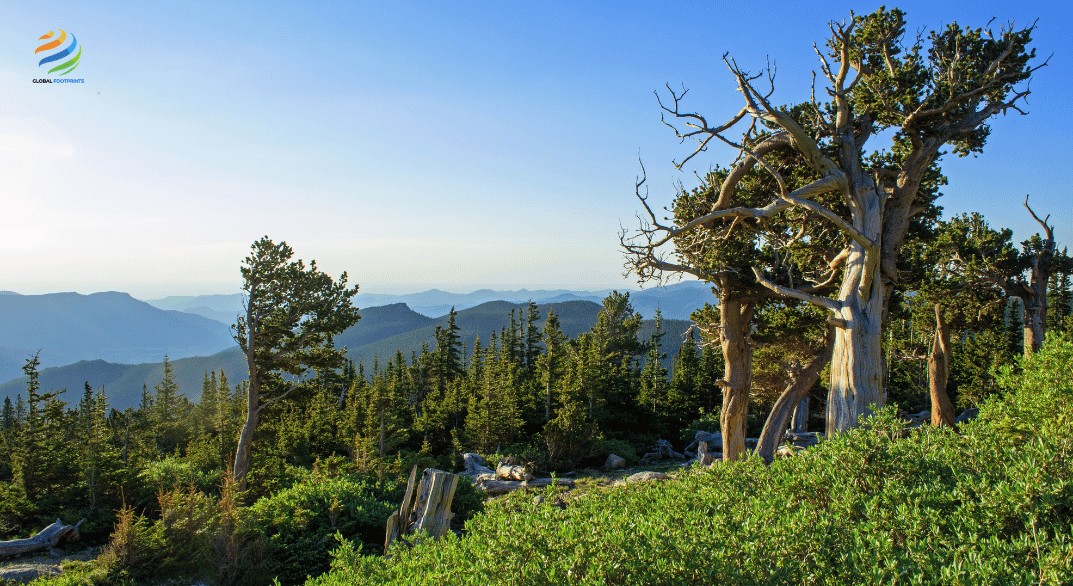
Bristlecone Pines on Mount Goliath
The highest paved road in North America climbs 7,000 feet in 28 miles and tops out at 14,130 feet. For anyone who has been told a Colorado 14er is off the table, this is the answer, because the entire experience works from a car seat.
Two things changed in 2026, and both matter
The road reopened Memorial Day weekend 2026 after a nearly two-year reconstruction closure.
Every vehicle now needs a timed ticket from Recreation.gov, and there is no early-morning exemption. The old “arrive before 8 a.m.” workaround is gone. Under the new locally managed operating structure, federal recreation passes, including America the Beautiful and the Access Pass, are no longer accepted here. Hikers and cyclists enter free.
Accessibility Highlights
The road is paved the whole way, with pullouts and parking at Summit Lake, Mount Goliath, and the summit interpretive site.
The Dos Chappell Nature Center at Mount Goliath, run in partnership with Denver Botanic Gardens, offers exhibits and guided garden walks.
Vehicles are capped at 30 feet. Motorhomes are not recommended, and there are no guardrails.
Things to Do
This is windshield wildlife viewing at its finest. Mountain goats, bighorn sheep, and marmots frequently graze at roadside. Alpine wildflowers peak in July, and the bristlecone pines at Mount Goliath are among the oldest living organisms on Earth. Budget two to three hours. Book your timed ticket.
Critical logistics: There is no cell service at the Welcome Station. Download or print your ticket before leaving Idaho Springs or Bergen Park, because tickets are not sold on site. Seventy-five percent of the tickets release 30 days out at 8 a.m. MDT, and the remaining 25% drop two days ahead. The road closes for events on select dates, so check before you drive.
Where to Stay
Idaho Springs and Georgetown are lovely, but their historic buildings mean stairs and narrow doorways. The I-70 corridor chain properties near Idaho Springs and Georgetown are the pragmatic choice for roll-in showers and step-free entry, and they put you 30 minutes from the byway’s base.
Quality Inn Golden - Denver West in Golden, Co
Holiday Inn Estes Park in Estes Park, CO
3. Crested Butte
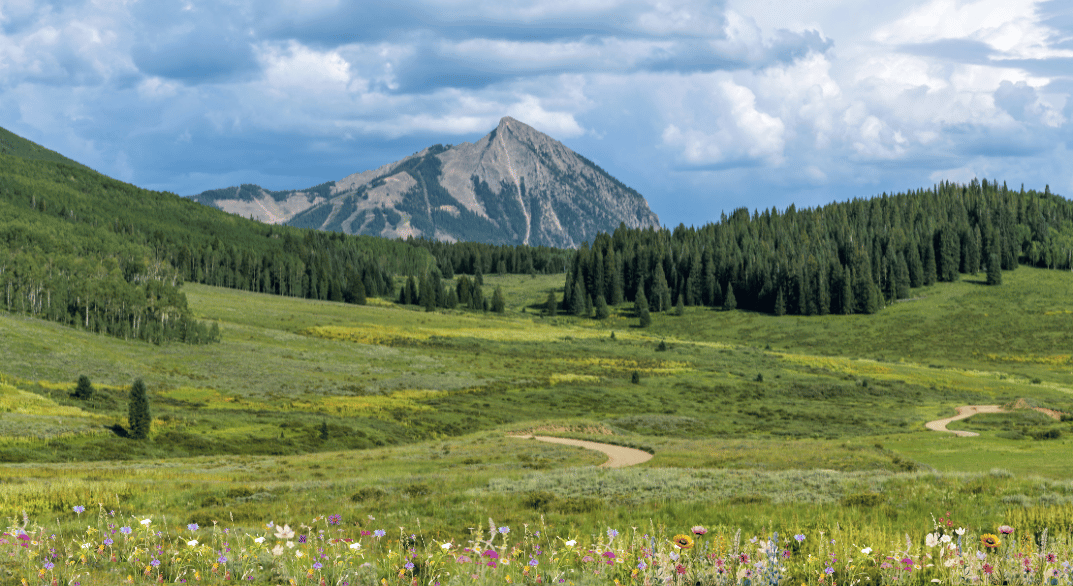
Mount Crested Butte
Crested Butte is the Wildflower Capital of Colorado, and one of the rare mountain towns where the flagship trail was designed for wheels.
Accessibility Highlights
The Lower Loop’s main “wide path,” built by the Crested Butte Land Trust, is explicitly engineered for wheelchairs, hand cycles, and strollers. It runs flat and wide past Peanut Lake, with Gothic Mountain reflected in the water.
A restricted parking lot roughly 1.2 miles up Peanut Lake Road is reserved for visitors with disabilities and can be reserved in advance. This is a genuinely thoughtful touch, since the main lots overflow by 9 a.m.
The Rec Path between Crested Butte and Mt. Crested Butte is a 10-foot-wide paved path running three miles through hay meadows.
Free Mountain Express buses connect town and the resort base.
Things to Do
Peak bloom generally runs mid-July into early August, and the flowers are genuinely everywhere: roadsides, town, and trails. In summer, the Lower Loop hosts a StoryWalk partnership with the Old Rock Library, with pages posted along the path. Drive to the Umbrella Bar at Ten Peaks for a mid-mountain meal with 360-degree views. From the base, turn right on Gothic Road for 1.5 miles, then right on Prospect Road, and follow the signs. No 4WD is needed, though the last stretch turns to dirt and vehicle access closes during private events.
The Crested Butte Wildflower Festival celebrated its 40th anniversary July 10 to 19, 2026, and the 2027 edition runs July 9 to 18. Events register individually and sell out months ahead. Browse wildflower festival workshops.
The historic town is postcard-perfect and full of raised Victorian porches and steps. Mt. Crested Butte’s base-area condo-hotels have elevators, garage parking, and a much higher hit rate on accessible units. Compare hotels in the area.
Holiday Inn Express & Suites Gunnison in Gunnison, CO
Quality Inn Gunnison-Crested Butte in Gunnison, CO
4. The Telluride Gondola
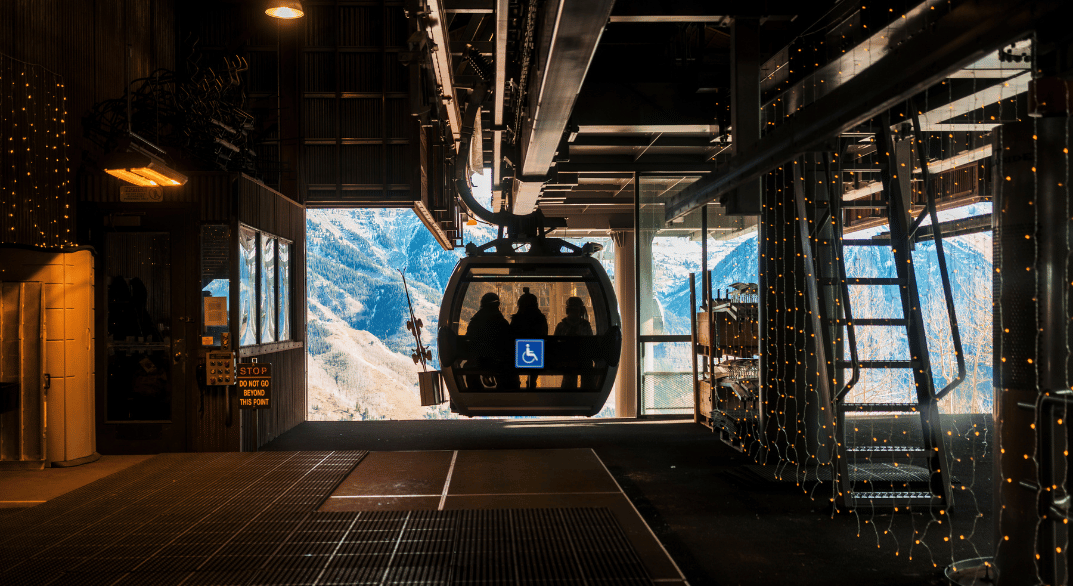
The Telluride Gondola is the first and only free public transportation of its kind in the United States, and quietly one of the best-designed accessible attractions in Colorado.
Accessibility Highlights
Wheelchair-accessible cabins are available at every station. Ask an attendant, and they will slow or stop the cabin for boarding and help load chairs, strollers, skis, or bikes.
The ride is completely free. There is no ticket, no reservation, and no fare.
Free daytime parking is available in the Mountain Village gondola garage, so you can park once and skip Telluride’s brutal parking situation entirely.
Mountain Village is built around four connected pedestrian plazas with step-free routes and accessible restrooms (grab bars, 36-inch doors, automatic sensor sinks) under the Heritage Plaza arcade.
Things to Do
The 12-minute ride climbs to about 10,540 feet at San Sophia Station, with views across the San Juans stretching to Utah’s La Sals on a clear day. Ride it at sunset, and stop at San Sophia for the overlook. The Telluride Adaptive Sports Program has been running for over 30 years and offers adaptive mountain biking, hiking, and kayaking in the summer, plus sit-skiing and mono-skiing in winter. It is one of the most comprehensive adaptive programs at any resort in the country, and its waiting area is ramped with handrails and more than 60 inches of turning space. Book an adaptive session.
Hours: Summer 2026 runs May 21 through October 25, daily from 6:30 a.m. to midnight, with a maintenance break before winter operations resume November 20. The gondola runs on wind power and can close without notice for weather or outages.
Where to Stay
Mountain Village is the accessibility play, with newer construction, elevators, step-free plazas, and the gondola at your door. Downtown Telluride’s historic inns are gorgeous and frequently have stairs.
The Peaks Resort and Spa in Mountain Village, CO
Madeline Hotel and Residences in Telluride, CO
Fairmont Heritage Place, Franz Klammer Lodge in Telluride, CO
Victoria Inn in Telluride, CO
5. Rocky Mountain Arsenal National Wildlife Refuge
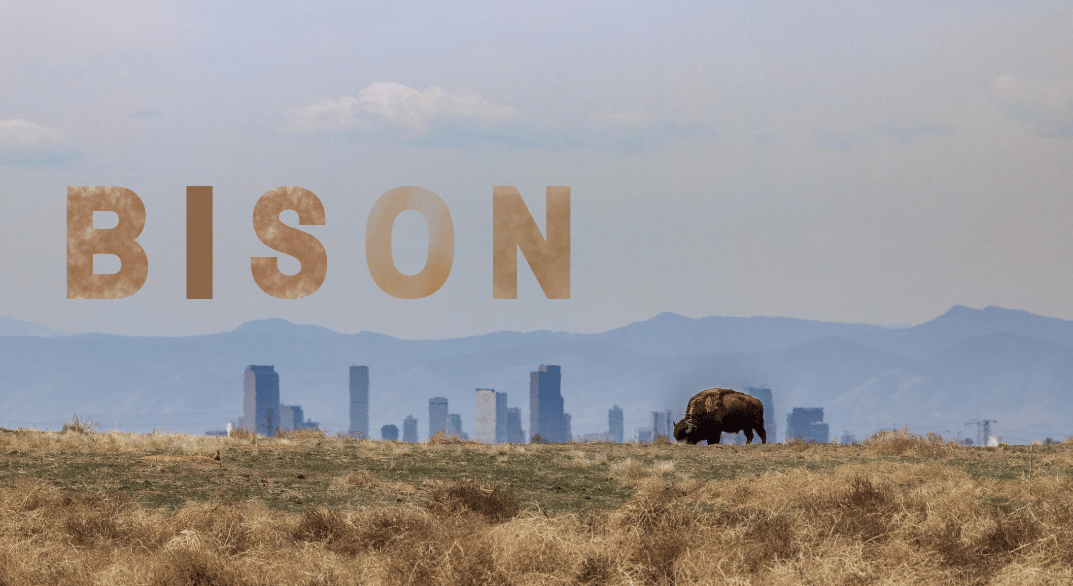
Looking towards Denver from Rocky Mountain Arsenal National Wildlife Refuge
Rocky Mountain Arsenal is fifteen thousand acres of prairie ten miles northeast of downtown Denver, complete with a bison herd. Admission is free.
Accessibility Highlights
All restrooms and parking lots at the refuge are accessible. Most of the 20 miles of trail are accessible as well. The exceptions are Rattlesnake Hill and portions of the Prairie and Havana Ponds Trails.
Lake Mary Loop Trail (0.6 miles) is paved, with a long boardwalk, piers over the water, two wheelchair-friendly fishing piers, and a shade structure with picnic tables.
The 11-mile Wildlife Drive requires nothing but a car and about an hour, with a free audio tour keyed to mile markers.
Things to Do
Drive the loop for bison, mule and white-tailed deer, prairie dogs, coyotes, raptors, and waterfowl. You are required to stay in your vehicle through the one-way bison section and keep 75 feet back, which makes the Wildlife Drive the single best barrier-free wildlife experience on the Front Range. At the Visitor Center, see the live black-footed ferret exhibit off the back patio and the Discovery Room. Catch-and-release fishing at Lakes Mary and Ladora runs April through November for a small fee.
One important note: Only service animals are permitted on the refuge. Pets are restricted to the Perimeter Trail. Hours are sunrise to sunset, extending to 8 p.m. from May 1 to August 1. Plan your refuge visit.
Where to Stay
The Denver airport corridor and the Central Park and Northfield neighborhoods put you 15 minutes out with a deep bench of newer hotels. These offer the best odds anywhere on this list for roll-in showers, visual alarm systems, and TTY-equipped rooms.
Hyatt Place Peña Station in Denver, CO
Homewood Suites by Hilton Denver Airport Tower Road in Denver, CO
Cambria Hotel Denver International Airport in Aurora, CO
The Takeaway
Here is what strikes me about these five places: not one of them is a consolation prize. Lily Lake at sunrise, a mountain goat at 14,000 feet, a wildflower meadow in July, the San Juans from a gondola cabin, a bison twenty minutes from a major airport. These are postcard experiences. They just happen to be reachable.
The work is in the logistics. Reserve the timed entries. Call ahead about the roll-in shower. Confirm the byway ticket rules, because they changed. Do that, and Colorado opens up considerably wider than most people assume.
Go see it.
Accessibility features and reservation systems change frequently. Verify current conditions with each destination before traveling.
Frequently Asked Questions
Do I need a reservation to drive Mount Blue Sky Scenic Byway?
Yes. Every vehicle and motorcycle needs a timed ticket purchased in advance on Recreation.gov, and there is no early-morning exemption. The old “arrive before 8 a.m.” rule no longer applies. Tickets are not sold at the Welcome Station, and there is no cell service there, so download or print yours before leaving Idaho Springs or Bergen Park. Hikers and cyclists enter free.
Does the America the Beautiful pass work at Mount Blue Sky?
No. Under the recreation area’s locally managed operating structure, federal recreation passes, including America the Beautiful, the Access Pass, and Federal Lands Access Passes, are no longer accepted at Mount Blue Sky. The Access Pass still covers entrance to Rocky Mountain National Park.
Can you visit a Colorado 14er without hiking?
Yes. Mount Blue Sky Scenic Byway is paved to a summit interpretive site at 14,130 feet, making it the highest paved road in North America. The full drive takes two to three hours round trip, requires no 4WD, and is typically open from Memorial Day weekend through Labor Day.
Which Rocky Mountain National Park trails are wheelchair accessible?
Four trails are formally designated as wheelchair accessible: Lily Lake, Sprague Lake, and Bear Lake on the east side, and Coyote Valley Trail on the west side. Lily Lake and Sprague Lake are the easiest, since both are 0.8-mile packed-gravel loops with under 35 feet of elevation gain and accessible fishing piers. Bear Lake is the least accessible of the four, with grades exceeding 8% and log steps on its southwest side.
Do I need a timed entry reservation for Lily Lake?
Yes. Lily Lake sits within Rocky Mountain National Park’s timed entry zone, so a standard Timed Entry reservation is required from 9 a.m. to 2 p.m., May 22 through October 12, 2026. Sprague Lake and Bear Lake require the separate Timed Entry + Bear Lake Road permit, which covers 5 a.m. to 6 p.m.
Where can you see moose in Rocky Mountain National Park?
Sprague Lake at dusk and the Coyote Valley Trail in the Kawuneeche Valley are the most reliable accessible spots for moose. Both are flat, hard-packed trails. Lily Lake is a better bet for waterfowl, muskrats, and songbirds than for moose.
Is the Telluride Gondola wheelchair accessible?
Yes. Wheelchair-accessible cabins are available at every station, and attendants will slow or stop a cabin to assist with boarding wheelchairs and strollers. The gondola is completely free, with no ticket or reservation required, and it runs daily from 6:30 a.m. to midnight, May 21 through October 25, 2026.
Is the Rocky Mountain Arsenal Wildlife Drive free?
Yes. The 11-mile Wildlife Drive is free, takes about 45 minutes to an hour, and comes with a free audio tour keyed to mile markers. Admission to the refuge itself is also free, and all parking lots and restrooms at the refuge are accessible.
Where can you see bison near Denver?
Rocky Mountain Arsenal National Wildlife Refuge, roughly ten miles northeast of downtown Denver, has a bison herd visible from the Wildlife Drive. Visitors must stay in their vehicle through the one-way bison section and keep at least 75 feet away, which makes it one of the most reliable barrier-free wildlife experiences on the Front Range.
Are dogs allowed at Rocky Mountain Arsenal National Wildlife Refuge?
Only service animals are permitted on the refuge’s interior trails and in the Visitor Center. Pets are restricted to the Perimeter Trail.
Is Crested Butte’s Lower Loop trail wheelchair accessible?
The main “wide path” section of the Lower Loop was built specifically for wheelchairs, hand cycles, and strollers, and it runs flat past Peanut Lake with views of Gothic Mountain. A restricted parking lot about 1.2 miles up Peanut Lake Road is reserved for visitors with disabilities and can be reserved in advance.
When is peak wildflower season in Crested Butte?
Peak bloom generally runs mid-July through early August, though exact timing shifts each year with snowmelt and elevation. The Crested Butte Wildflower Festival is scheduled around it, and the 2027 festival runs July 9 to 18.