Affiliate Disclosure: Some of the links on this site are affiliate links. If you click on one and make a purchase, we may earn a commission at no additional cost to you. We only recommend products and services that we believe will be useful to our readers, and affiliate relationships never influence our opinions or the content we publish.
A foreign address can make ordinary tasks feel surprisingly complicated. You may need a local account to pay a landlord in Portugal, receive client payments in Mexico, or avoid repeated foreign transaction fees during a long stay in Thailand. So, can Americans open foreign banks? In practical terms, Americans can often open accounts at foreign banks, but eligibility, paperwork, tax reporting, and bank policies make the answer more nuanced than a simple yes.
For a short trip, a US card and a small amount of local cash may be enough. For a move abroad, remote-work, or a property purchase, a foreign bank account can become a useful part of daily life. The key is choosing an option that fits your actual plans, not opening an account simply because you expect it to make international living easier.
Is It Legal for US Citizens to Hold Money Abroad?
Yes. US citizens and residents are generally allowed to hold money in bank accounts outside the United States. There is no broad rule that prevents an American from opening an account overseas.
The bigger question is whether a particular bank will accept you. Many banks welcome non-resident customers, especially in destinations with large expat communities. Others require local residency, a local tax number, proof of employment, or an in-person appointment. Some institutions choose not to work with US citizens at all because US reporting rules create extra compliance work for them.
That last point catches many travelers off guard. Banks around the world may ask whether you are a US person, request your Social Security number, and require tax forms before approving an account. Be direct and truthful. Trying to hide US citizenship can lead to account closure and much more serious problems later.
The Benefits and Trade-Offs of Local Expat Banking
A local bank account is not automatically essential, but it can be genuinely helpful once your connection to a destination becomes more than temporary. In many countries, landlords, employers, phone providers, and utility companies prefer local transfers over international payments or cash.
For digital nomads and long-stay travelers, it can also make daily budgeting clearer. Paying in local currency may reduce conversion costs, and having a separate account for rent and household expenses can make life abroad feel more organized. If you earn locally or operate a business overseas, banking access may be necessary rather than optional.
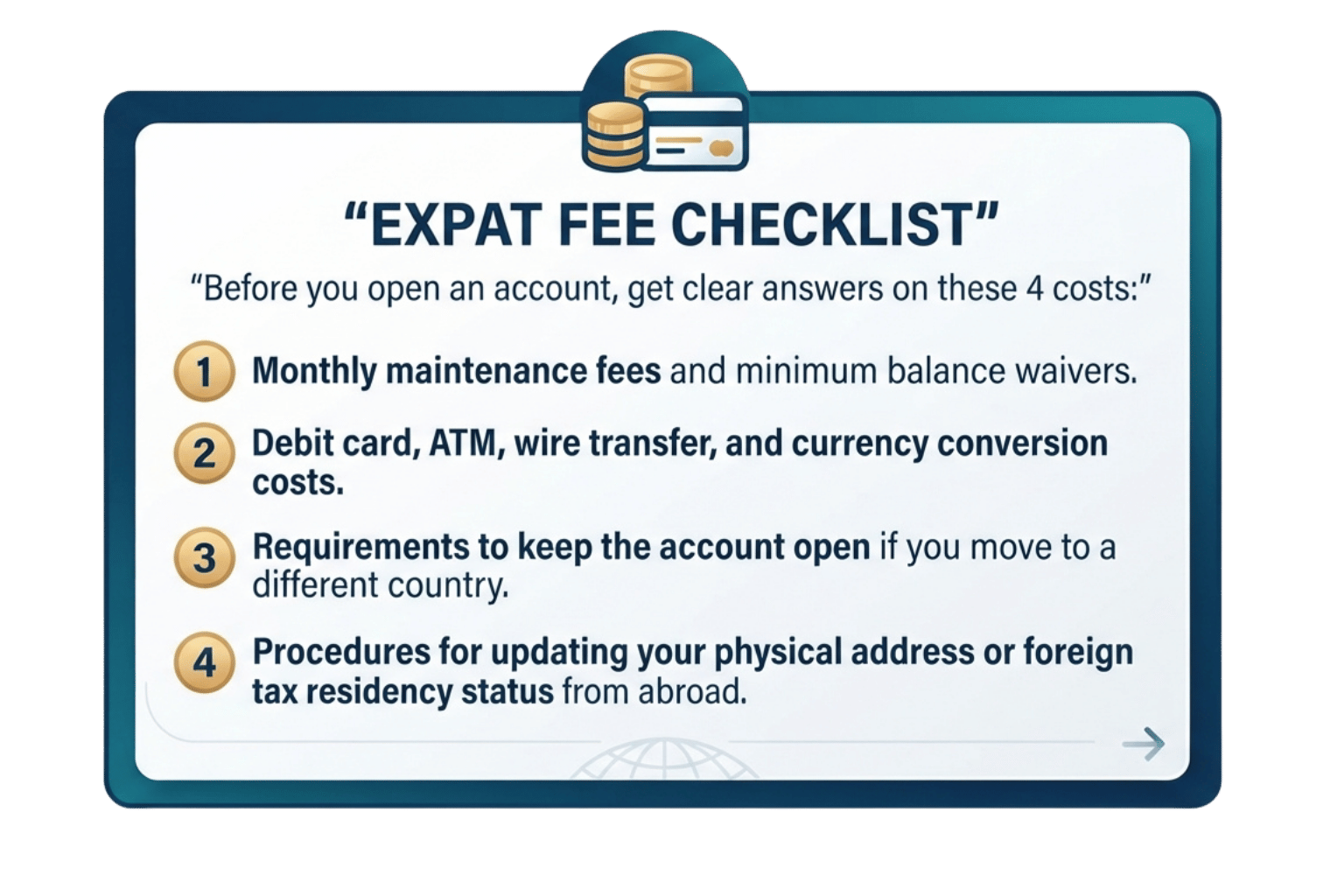
There are trade-offs. A local account can come with monthly maintenance fees, minimum balance requirements, limited English-language support, and slow customer service. Closing it after you leave can be difficult, particularly if the bank requires an in-person visit. For someone spending only a few months abroad, a US bank account with low foreign transaction fees may be the simpler choice.
Expat Banking Checklist: Documents Foreign Banks Require
Requirements vary by country and even by branch, but banks typically want evidence of identity, address, and the source of your funds. Planning ahead helps because a missing document can turn a quick errand into several return visits.
You may be asked for:
A valid passport and a second form of photo identification.
Proof of your US address and your local address (such as a signed lease, residency card, utility bill, or official registration document).
A local tax identification number, employment contract, visa, or proof of income.
An initial opening deposit.
Bring original documents when opening an account in person, along with paper copies. Some countries require translations, notarization, or an apostille for certain documents. Ask the bank exactly what it accepts before booking travel around an appointment. Requirements are often different for a tourist, a student, a resident, and a person buying property.
Non-Resident vs. Multi-Currency International Accounts
Certain destinations offer accounts designed for nonresidents, but they are not always as convenient as standard local accounts. They may require higher opening deposits, offer fewer services, or limit debit card access. In some cases, a flexible international option like a Wise Multi-Currency Account can work significantly better for holding, converting, and moving money before you officially establish local residency.
These options can be useful during the transition period but read the account terms closely. A product marketed as “international” may still have high transfer fees, unfavorable exchange rates, or restrictions for US citizens.
US Tax Compliance: FBAR and Form 8938 Rules for Expats
Holding a foreign account is legal. Failing to report it when required is where Americans can run into trouble. US citizens and many US residents generally remain subject to US tax rules while living abroad. That means foreign interest income, investment income, and certain other earnings may need to be reported on a US tax return, even if the money stays overseas.
Two reporting rules are especially critical to track:
The FBAR (FinCEN Form 114): You must file this if the combined highest balances of all your foreign financial accounts exceed $10,000 at any point during the calendar year. The threshold is based on the aggregate total across all eligible accounts, not just a single account.
Form 8938 (FATCA): This may apply to certain taxpayers who meet higher foreign-asset thresholds. Its requirements depend entirely on your filing status and whether you live in the United States or abroad.
These forms are separate from your regular tax return, and their deadlines and filing methods can differ. Keep immaculate records from the start: account-opening documents, monthly statements, peak balances, transfer receipts, and exchange-rate details.
Disclaimer: A tax professional who regularly works with Americans abroad can help you understand what applies to your situation. This is particularly worthwhile if you hold investments, own a foreign business, receive overseas income, or have accounts jointly with a family member.
How to Choose the Best Foreign Bank for Your Moving Plans
Start with the purpose, not the country. If you need to pay for groceries and rent during a one-year stay, prioritize low local transfer fees, a reliable debit card, and convenient ATM access. If you receive freelance payments from clients in several currencies, look closely at incoming transfer fees, conversion spreads, and account limits.
Security matters as much as convenience. Confirm whether deposits are protected by the country’s deposit insurance system, how you will access support from abroad, and what happens if your phone number changes. Ask whether online banking works outside the country and whether two-factor authentication requires a local mobile number. A beautiful branch office or a friendly account manager should not outweigh expensive terms.
Step-by-Step Plan to Open Your Overseas Account
First, confirm whether you truly need a local account before arriving. Contact several banks in your destination and explain your status clearly: US citizen, anticipated length of stay, visa type, and reason for opening the account. Written confirmation of the required documents can save time once you are on the ground.
Next, keep enough funds accessible in your US accounts while the foreign account is being opened. International transfers, debit cards, and cash access can bridge the gap, but avoid relying on a single payment method. Travel plans change, bank reviews take longer than expected, and a local account may not be active on the day you expect.
Finally, treat your account as part of your broader plan abroad. Review health insurance, housing payments, local tax obligations, emergency savings, and how you will transfer money home if needed. Financial preparation may not be the most glamorous part of a new chapter overseas, but it gives you more freedom to enjoy the destination once you arrive.
The best foreign bank account is usually not the one with the flashiest international sales pitch. It is the one that supports the way you will live, spend, earn, and explore, leaving more room for the experiences that brought you abroad in the first place.