Moving Abroad in 2027: The New Reality of Remote Relocation
A beach-view apartment can make relocation look simple. The first request for a local tax number, proof of income, or a rental deposit in a new currency tells a more useful story. Heading into 2027, remote relocation trends are moving beyond the dream of working anywhere toward a more deliberate question: where can you build a stable, affordable, and genuinely enjoyable life abroad?
For anyone considering a long stay or an international move, that shift is good news. It encourages better choices. Rather than chasing the loudest digital nomad hotspot, more remote workers are comparing visa rules, healthcare access, flight connections, housing supply, community, and the practical cost of being far from home.
Remote Relocation Trends for 2027 Are Becoming More Intentional
The first wave of remote relocation often centered on flexibility. If work could happen from a laptop, a new country felt like an open invitation. Looking toward 2027, flexibility still matters, but it is no longer enough on its own. People want destinations that support real life, not just a productive month with beautiful photos.
That is changing how Americans evaluate places such as Portugal, Mexico, Spain, Costa Rica, Thailand, and parts of Latin America and Eastern Europe. A lower grocery bill is attractive, but it does not erase a difficult residency process, limited long-term rentals, unreliable internet outside major neighborhoods, or the challenge of finding medical care you trust.
The strongest relocation decisions now begin with a personal definition of success, which varies by demographic:
The Solo Freelancer: Prioritizing an affordable city with an active international community and co-working infrastructure.
The Remote Family: Putting safety, local or international schools, healthcare, and stable family housing first.
The Pre-Retiree: Valuing walkability, safety, and a predictable residency pathway over nightlife or trendy spaces.
There is no universal best country to move to. There is only a better fit for your income, work arrangement, lifestyle, and willingness to adapt.
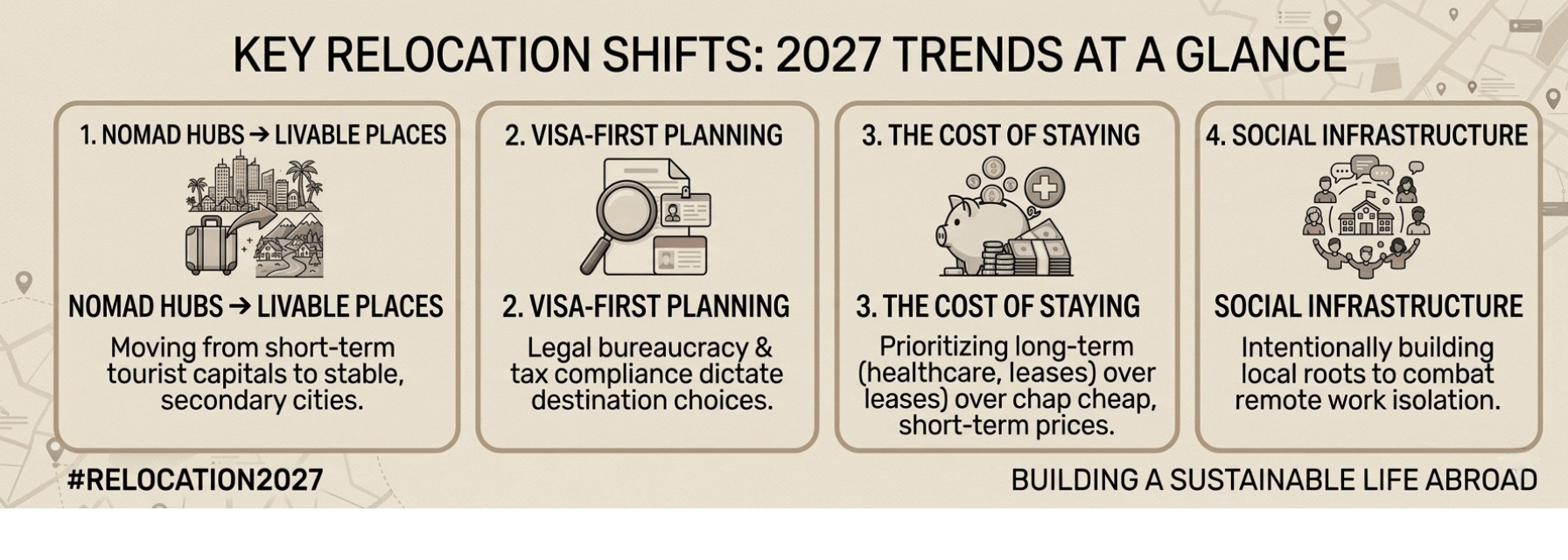
The Move From Nomad Hubs to Livable Places
Popular remote-work destinations are not disappearing, but the appeal of constantly changing locations is fading for many people. Short stays can be energizing. They can also make it hard to form friendships, establish routines that support well-being, or understand what everyday life costs beyond the visitor experience.
In response, more remote workers are choosing one or two home bases each year instead of hopping between countries every few weeks. This approach gives people time to learn a neighborhood, take language classes, shop at local markets, and see a destination outside peak travel season. It can also make visa compliance and tax planning easier to manage.
Secondary cities are benefiting from this change. Capital cities often provide the best air connections, job networks, and English-language services, but they may come with rising rents and crowded housing markets. Smaller cities can offer a calmer pace, more space, and a closer connection to local culture. The trade-off is that public transportation, specialist healthcare, and international communities may be thinner.
Before choosing a smaller destination, spend time there during an ordinary month. Visit grocery stores, pharmacies, residential streets, and transit stops. Test your work setup during the hours you normally work. A place that feels magical for five days can feel very different when you need to receive a package, renew a prescription, or make an early-morning client call.
Visas Are a Bigger Part of the Decision
Digital nomad visas and remote-worker residence programs have made relocation feel more accessible, yet the details matter more than the label. Requirements vary widely. Some programs ask for a minimum monthly income, private health insurance, a clean criminal record, translated documents, proof of accommodation, or evidence that your employer permits overseas work.
A visa can provide legal permission to reside in a country, but it does not automatically solve every issue tied to working abroad. Your employer may have policies about where you can work. Your health insurance may not cover long-term care overseas. Time spent in a country may create tax obligations for you, your business, or your employer.
For self-employed workers, documentation is often the central challenge. Consistent invoices, bank statements, tax returns, client contracts, and a clear explanation of your business can make an application more credible. For employed remote workers, written approval from an employer is worth securing before plane tickets are purchased.
Treat immigration planning as part of the relocation budget, not an administrative task to squeeze in at the end. Application fees, document authentication, translations, legal guidance, insurance, and required travel can add up quickly. Rules also change, so verify current requirements directly with official authorities before making decisions around a particular program.
Cost of Living Is Giving Way to Cost of Staying
A destination can be inexpensive for a visitor and expensive for a resident. This is one of the most practical shifts defining the 2027 landscape. Long-term housing, deposits, utilities, private insurance, transportation, residence renewals, and flights home deserve more attention than a headline about cheap restaurant meals.
Housing is especially complicated. In high-demand expat and tourist areas, furnished month-to-month rentals can cost far more than local long-term leases. Local leases may require a guarantor, several months of rent up front, a local bank account, or documents newcomers do not yet have. Starting with temporary accommodation can be smart, but it should be viewed as a research period, not a permanent price benchmark.
Build a relocation budget with three layers:
The Monthly Base: Your predictable, everyday living costs.
The Startup Fund: Capital for housing deposits, visa fees, furnishings, and initial legal steps.
The Emergency Reserve: A safety net that allows you to return to the United States or relocate again without panic if your employment status changes.
Exchange-rate shifts require room in the plan as well. If your income arrives in U.S. dollars and your expenses are in another currency, a favorable month can create false confidence. A cautious budget gives you space for currency changes rather than assuming today’s rate will last.
Community and Belonging Are Now Core Infrastructure
Reliable internet remains essential, but social connection is becoming equally central to a successful move. Remote work can be freeing, yet it can also make isolation easy, especially for people whose colleagues, friends, and family remain in the United States.
The most satisfying long-term moves usually include some effort to participate locally. That might mean learning basic language skills, joining a hiking group, volunteering, taking a cooking class, or becoming a regular at a neighborhood cafe. Expat communities can offer practical support, particularly in the first months, but they work best as a bridge to a broader life rather than a bubble.
Cultural curiosity matters here. Relocation is not an extended vacation with fewer meetings. Your new home has local customs, housing pressures, political realities, and communities that existed long before remote workers arrived. Spend money thoughtfully, learn the rules of the place, and approach differences with humility. That mindset creates better experiences for newcomers and residents alike.
How to Test a Move Before You Commit
A scouting trip is one of the best investments an aspiring expat can make, provided it resembles daily life. Stay in the neighborhood where you might realistically rent, not only near major attractions. Work regular hours for at least several days, including any late-night or early-morning calls required by your U.S.-based job.
Use the trip to answer the small, boring questions that define your quality of life: Can you comfortably access groceries and healthcare? Does the climate suit you outside of peak vacation season? How long does it actually take to reach the airport?
What would you do if your internet went down during a critical meeting? Testing these points beforehand turns a stressful gamble into a calculated transition. By stripping away the tourist fantasy and looking at a country through a practical lens, you ensure that your international move isn't just a temporary escape, but a sustainable foundation for the future.
If you want to find out whether moving abroad is possible for you, start by putting the numbers on paper. When I was working through my own move, I kept rebuilding the same spreadsheets and losing track of which documents I still needed, so I created the Moving Abroad Planner to keep it all in one place. The interactive PDF walks you through your decisions, documents, and next steps. The spreadsheet handles the math, with dedicated tabs for comparing countries, planning your finances, converting currency, estimating relocation costs, and mapping your timeline.