How to Travel with Medication: Foreign Prescription Rules Explained
The tricky part of traveling with medication rarely happens at the pharmacy counter. It shows up later: while you're packing for a long flight, changing planes in a country you never planned to enter, or standing in a customs line with a medicine that's perfectly standard at home but restricted abroad. That's why foreign prescription rules deserve a spot on your trip-planning checklist, right alongside your passport, visa, and travel insurance.
Here's the catch: a valid US prescription doesn't automatically make a medication legal to carry, import, or refill in another country. The rules can change depending on where you're headed, how much you bring, and whether your medicine counts as controlled. If you're a traveler, a digital nomad, or a future expat, a little preparation now can keep a stressful surprise from derailing a trip you've been looking forward to.
Why Do Foreign Prescription Rules Vary So Much?
Every country writes its own public-health and drug-control laws, so a medication that's standard in the United States may be unavailable elsewhere, need local authorization, or land in a restricted category. This comes up most often with ADHD stimulants, opioid pain medicines, anti-anxiety drugs, sleep aids, certain cough syrups, and anything containing cannabis-derived ingredients.
The name on the bottle can add to the confusion. Brand names change from one country to the next, and the same active ingredient may be sold under a completely different name. Sometimes a medicine that's prescription-only in the US is easy to buy over the counter abroad. In other places, even a familiar over-the-counter product is tightly controlled.
So the practical move is to research the active ingredient, not just the brand. Check your pharmacy label or ask your pharmacist for the generic name, strength, and dosage. That's the detail you'll need when you look up destination requirements or talk with a doctor overseas.
Check the Rules for Every Country on Your Route
Don't stop at your final destination. A transit country's rules can matter if you leave the airport, collect checked luggage, stay overnight, or get delayed long enough that you have to enter the country. A medication that's fine in Italy, for example, might be treated differently during a connection somewhere else.
Start with the official embassy or consulate information for each country you'll enter. Then look at its customs authority or national health and drug regulator, especially if you're carrying a controlled medication. Those are the sources that can spell out permitted quantities, required paperwork, and whether you need approval in advance.
When you reach out, be specific. Share the generic drug name, dosage, daily amount, and the total supply you plan to bring. Ask whether a doctor letter is enough, whether you need a permit, and whether there's a maximum number of days or months allowed. If you get an answer in writing, keep it.
Regulations change, and travel forums can be out of date or based on someone else's situation. Personal stories are useful for understanding what the process might feel like, but base your decisions on current official guidance.
Traveling With Controlled Medications: Start Early
Controlled medicines usually come with the strictest import requirements. Some countries allow only a 30-day supply. Others permit a longer personal-use amount if you have the right documentation. A few require an import certificate before you travel, and getting one can take weeks.
A prescription label on its own may not satisfy local authorities. If your medication is in this category, contact your prescriber well before departure and ask for a signed letter. It should identify you, list the generic and brand names of each medicine, state the dosage and medical need, and confirm the medication is for your personal use. Your clinician doesn't need to share more medical detail than necessary.
Cannabis products deserve extra caution. CBD, medical marijuana, THC products, and some hemp-derived supplements may be legal in your US state but prohibited internationally. A label that says "non-psychoactive" doesn't guarantee border officials will treat it as permitted. If the law is unclear, leave it at home and talk with your doctor about legal alternatives.
How Should You Pack Medication for the Border?
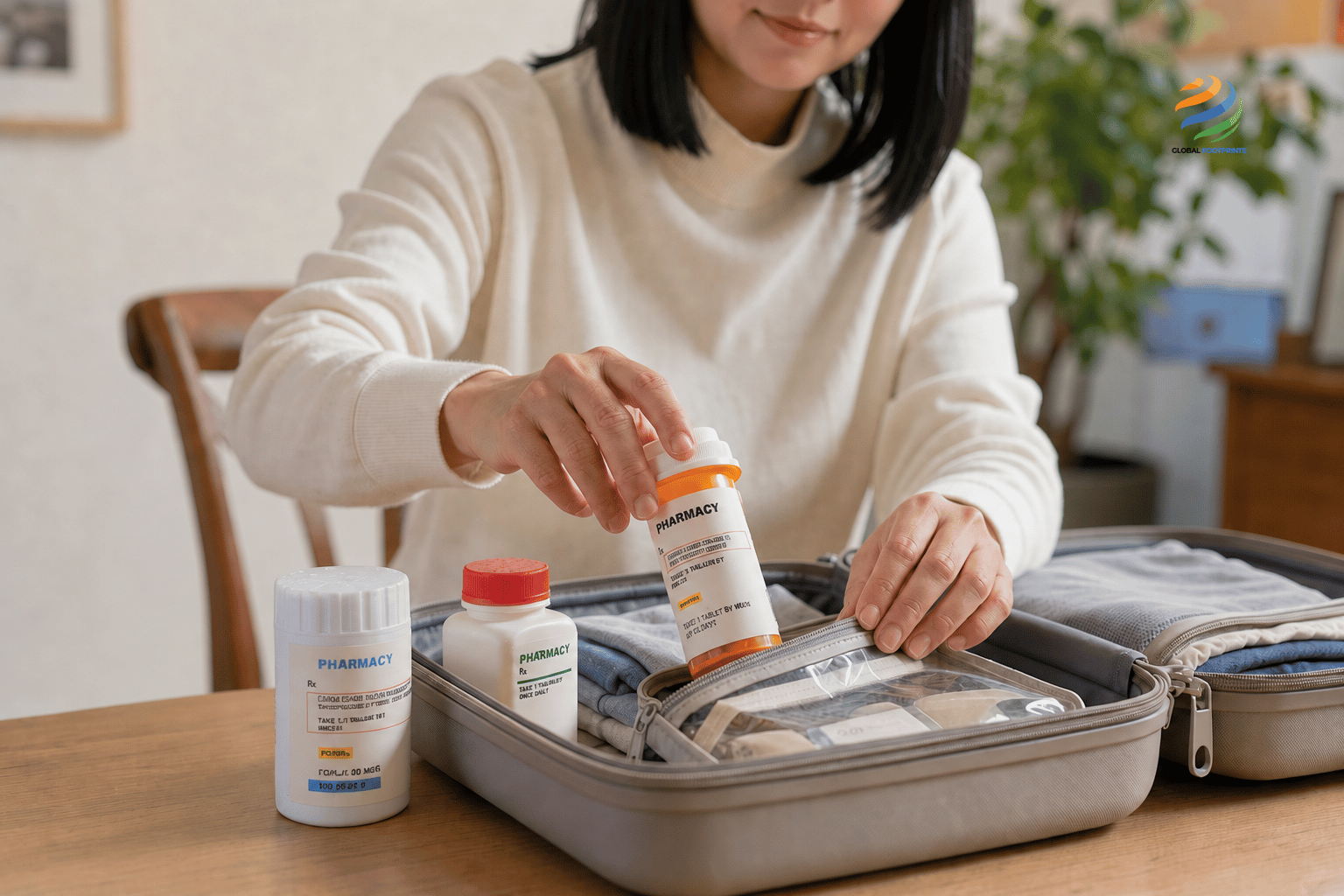
Keep prescription medication in its original pharmacy container, with a label that clearly shows your name, the prescriber, the medicine name, and the dosing instructions. A weekly pill organizer is handy once you've arrived, but loose pills are a poor idea when crossing an international border. If you use an organizer, bring it empty and fill it after you land.
Pack your medication in your carry-on, not your checked bag. Checked luggage can be delayed, lost, exposed to extreme temperatures, or separated from you if you're suddenly rerouted. This is especially important for insulin, injectables, anything that needs to stay cool, and any treatment you can't safely skip for a day or two.
For most travelers, this set of documents is a sensible safety net:
Original labeled medication containers
A copy of your prescription for each medicine
A signed doctor letter, especially for controlled drugs or injectable treatments
A short medication list with generic names, doses, allergies, and emergency contacts
Copies of any required import permits or official approvals
Keep paper copies with your travel documents and a secure digital copy on your phone. If privacy is a concern, include only the information that's relevant to travel and getting your medication.
How Much Medication Should You Bring?
For a short trip, most people pack enough for the whole stay plus a modest buffer in case flights are delayed. The right amount depends on your destination's limits, the medicine itself, your insurance coverage, and how hard it would be to get a replacement abroad.
Longer stays take more planning. Some countries won't allow a large personal supply, even with a valid US prescription. If you're relocating, studying abroad, or living as a digital nomad, find out whether your medication is available locally before you commit to a destination. You may need to see a local doctor soon after you arrive, and a US prescription might not be refillable at a pharmacy there.
Also, skip mailing medication to yourself. Packages can be delayed, returned, or seized, and the rules for shipped medicine often differ from those for medicine you carry. What looks like a convenient shortcut can turn into a much bigger problem than arranging a legal supply ahead of time.
What to Do If You Need Medical Care or a Refill Abroad
Even careful travelers lose a bag, spill a bottle, extend a trip, or need unexpected medical care. Before you leave, ask your insurer how international claims, telehealth, and prescription replacement work. Travel medical insurance can help with doctor visits, but policies vary widely in what they cover for pre-existing conditions and ongoing prescriptions.
If you need a refill, start with a licensed local doctor or clinic. Bring your medication list, a copy of your prescription, and your doctor letter. The clinician may prescribe a local equivalent, a different dosage, or an alternative treatment, depending on what's approved and available there. Be open to the possibility that there isn't a direct match.
Never buy prescription drugs from an informal seller, a social media contact, or an unverified website. Counterfeit medicines are a real risk, and the results can range from a treatment that doesn't work to serious harm. A reputable pharmacy and a local clinician may take longer, but they're the safer route.
Plan Your Medication Early, Then Enjoy the Trip
Planning your medication isn't about expecting trouble. It's about making time for the parts of travel that drew you in the first place: that first neighborhood walk, a chat at the market, the mountain view from a train window, or the chance to find out whether life abroad suits you.
Treat foreign prescription rules as a destination-specific detail rather than a one-time task. Confirm your medicines, get your paperwork in order, and revisit the requirements before every major trip. With the logistics handled early, you can put your attention where it belongs: seeing more of the world with confidence.