Picture two very different versions of your first morning in Lisbon.
In the first scenario, you wake up without a single plan. You follow the aroma of espresso down a tiled side street, grab a pastry, and decide your entire day on a whim. In the second, you meet a small group in the hotel lobby, greet a local guide who knows the city's secrets, and spend the afternoon laughing over petiscos with people who were total strangers yesterday.
The classic debate of solo travel vs group tours isn't actually about which style is more adventurous. It’s about what kind of experience will help you travel with confidence, curiosity, and purpose.
For everyday vacationers planning an international trip, the right answer depends on more than just your personality. Your budget, comfort with logistics, destination knowledge, and available time all change the equation. A tour can make an unfamiliar place feel completely accessible. On the flip side, traveling entirely on your own can open up a level of independence you didn't know you had.
Let's break down the real differences so you can choose the perfect fit for your next getaway.
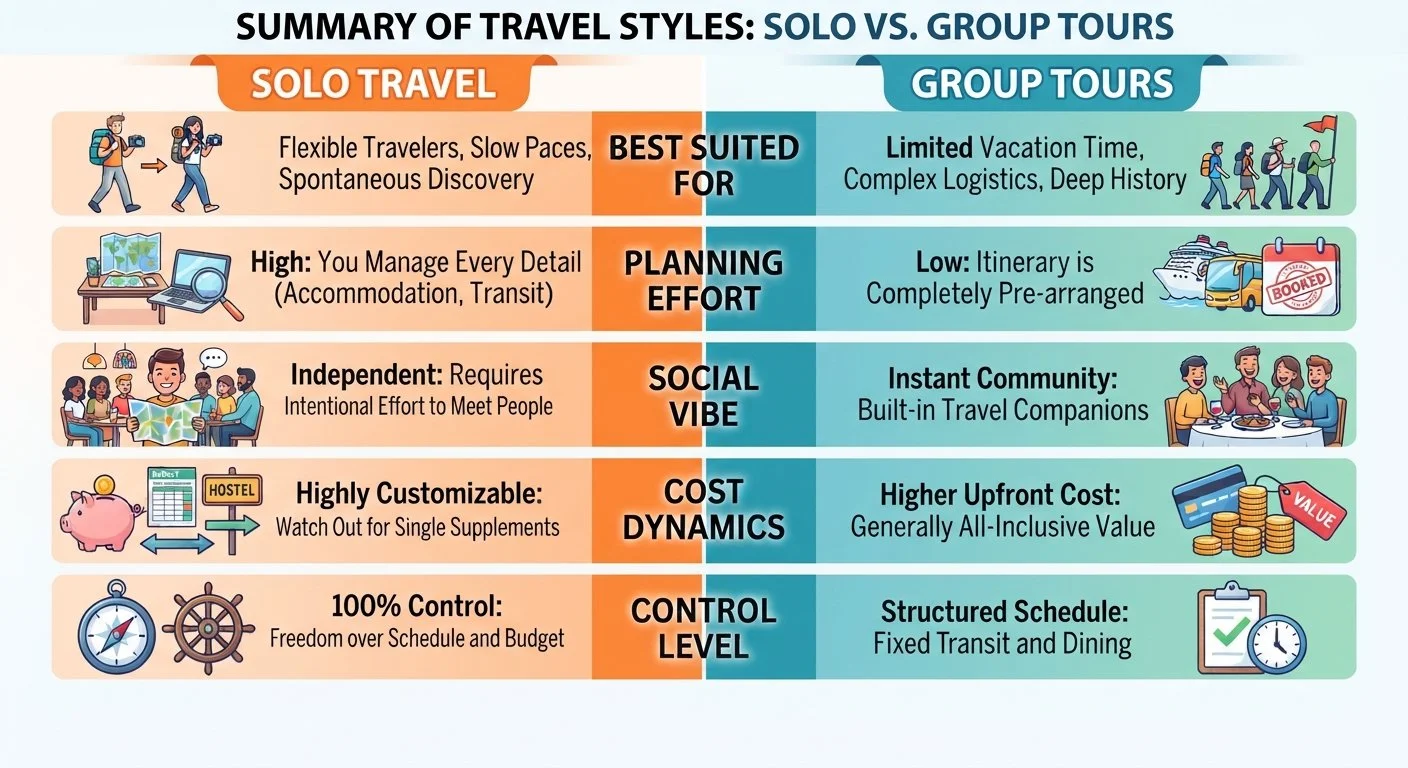
Solo Travel vs Group Tours: The Real Difference
When you travel solo, you own every single decision. You choose the neighborhood, the pace, the restaurants, the detours, and exactly when to call it a day. That total freedom is intoxicating, especially in destinations where getting lost is part of the magic.
But it also demands a lot of energy. You are the sole manager of your itinerary. If a train gets delayed, you’re the one decoding the station signs. If an accommodation feels sketchy, it’s on you to pivot.
Group tours trade that open-ended flexibility for effortless structure. Your transportation, lodging, activities, and local guides are locked in before you even pack your bags. For vacationers with limited time off who feel overwhelmed by international planning, this structure turns a complicated dream trip into a stress-free reality.
When Solo Travel Is the Better Choice
Independent travel works best when flexibility is your top priority and you actually enjoy the pre-trip research. If your ideal afternoon involves lingering at a museum for four hours or sitting in a sidewalk cafe people-watching, a rigid group schedule will drive you crazy.
Key Pros of Going Solo:
Ultimate flexibility: Change your plans on a dime without checking with anyone else.
Budget control: You can choose hostels, affordable guesthouses, or overnight trains to keep costs down.
No paid fluff: You never pay for bundled group activities you have zero interest in.
The Solo Travel Costs to Watch:
While it can be highly affordable, independent travel comes with a hidden financial hurdle: the single supplement. Private hotel rooms, taxis, and private day tours can end up costing more because there is no travel partner to split the bill with.
Essential Solo Travel Tips for a Smooth Trip:
Independence doesn’t mean winging it completely. If you are diving into first-time solo international travel, preparation is your safety net.
Nailed logistics: Know exactly how you’ll get from the airport to your bed before you land.
Offline backups: Save your accommodation addresses and maps offline, and always carry a backup credit card.
Intentional connection: Solo travel doesn’t mean being lonely, but social moments rarely happen by accident. Book a local cooking class, join a free walking tour, or stay in a locally owned guesthouse to meet people naturally.
When Group Tours Are Worth It
A group tour shines when a destination is logistically complex, your vacation days are tight, or you want deep context rather than just checking sights off a bucket list. Think of multi-city routes with complicated transit, regions with intense language barriers, or historic sites where a guide brings the ruins to life.
Weighing the Pros and Cons of Group Tours:
For many vacationers, having airport transfers and a built-in point person reduces the mental load of arriving in a new country to zero. This isn’t a "lesser" way to see the world—it is a strategic choice to maximize your limited time off.
The Pros: Built-in community, instant safety net, and access to local spots you’d never find on Google.
The Cons: You give up control. You might eat at a restaurant you wouldn't choose, leave a city just as you're falling in love with it, or spend a week with a traveler whose vibe doesn't match yours.
Pro-Tip: Not all tours are created equal. A massive, 45-person bus tour that hits three countries in five days is a completely different world from a 10-person cultural tour with built-in free afternoons. Always read the day-by-day itinerary carefully. Look at the transit times and see how much unscheduled breathing room you actually get.
The Destination Factor
Sometimes the decision comes down to geography rather than your personality.
Cities with robust public transit, English signage, and walkable centers are incredibly friendly for independent travelers. However, destinations where sites are miles apart, permits are required, or cultural norms are unfamiliar heavily reward local expertise.
If you can't decide, try a hybrid trip. Book a guided 4-day tour to get your bearings and meet some friends, then tack on three days of solo exploration at the end. It truly gives you the best of both worlds.
A Simple Way to Decide Before You Book
Before you pull out your credit card, ask yourself one simple question: What do you want to remember most about this trip?
If your dream memory is a spontaneous discovery, a quiet morning in a hidden alley, and the pride of figuring out a foreign subway system on your own, start planning a solo trip.
If your dream memory is sharing laughs over a long dinner table, hearing incredible storytelling from a local guide, and seeing a massive amount of a country without worrying about a single logistics headache, look for a small-group tour.
Be honest about your mental bandwidth. Planning an independent trip takes time and energy. Choosing a tour isn't a shortcut because you "can't" plan, it's a conscious choice to spend your energy enjoying the moments rather than managing them.
The best trip is simply the one that allows you to be fully present when you arrive.
What’s Your Next Move?
Choosing how to travel is just as important as choosing where to go. Take a look at your calendar, be honest about your planning bandwidth, and choose the option that makes you feel excited to pack your bags. If you found this guide helpful, feel free to share it with a friend who is currently trying to figure out their next international vacation!